You hear a lot of "we doubled our revenue" stories in this industry. What you don't hear as often is what actually had to happen behind the scenes before that growth was safe to chase.
This is one of those stories. It belongs to a couple we'll call Sarah* and Matt*, real clients of ours whose names and identifying details we've changed to protect their privacy. Matt runs the trade side of the business. Sarah works alongside him, managing the parts of the business that make everything else possible.
When they came to us, they weren't in crisis. That's actually what made their story worth telling. Too often, growth conversations only happen once a business is already stretched too thin. Sarah and Matt did something different. They built the foundation first, then made a deliberate, well modelled decision to grow.
Here's how it played out, and what it can teach you if you're standing at the same crossroads.
The Challenge: Steady, But Wondering What's Next
When Sarah and Matt first started working with us, their business already had two staff and one admin support person. Compared to a lot of the couples we sit down with, they were in a genuinely good position. Matt was taking a strong, consistent wage. Cashflow wasn't the white-knuckle experience it is for so many trade businesses.
But they had a question sitting quietly in the background. Should they grow? Was there more available to them, or were they already at the ceiling of what this business could comfortably hold?
This is a very different starting point to a lot of the businesses we work with. So often we're helping couples stabilise a business that's already leaking money, where the owner isn't being paid properly and staff wages are quietly eating the business alive. Sarah and Matt weren't leaking. They were stable, and stable people often make the best growth decisions, because they're not deciding out of fear.
Still, the question stood. More staff means more wages, more complexity, more people relying on the business to get it right. Without a clear plan, that's exactly how a stable business tips into a stressed one.
The Turning Point: Modelling the Numbers Before Making the Move
Rather than guessing, or growing on instinct because business "felt busy," we sat down with Sarah and Matt and did the unglamorous but essential work. We modelled what adding two more staff would actually mean for their business, not in vague terms, but with real numbers.
We looked at their current break-even by job type. We looked at what two additional wages would cost across a full year, including the costs that are easy to forget, like tools, vehicles, and onboarding time. We projected what revenue they'd need to generate to make those extra wages worthwhile, not just survivable.
This is the step so many tradie businesses skip. Growth gets treated as a feeling rather than a forecast. Sarah and Matt did it the other way around. Before a single job ad went up, they knew exactly what success needed to look like, and exactly what the numbers had to do to get there. If you want the full framework behind this thinking, we break it down in Should Your Tradie Business Hire More Staff, or Stabilise First?
The Action: Growing to Four Staff With a Real Target
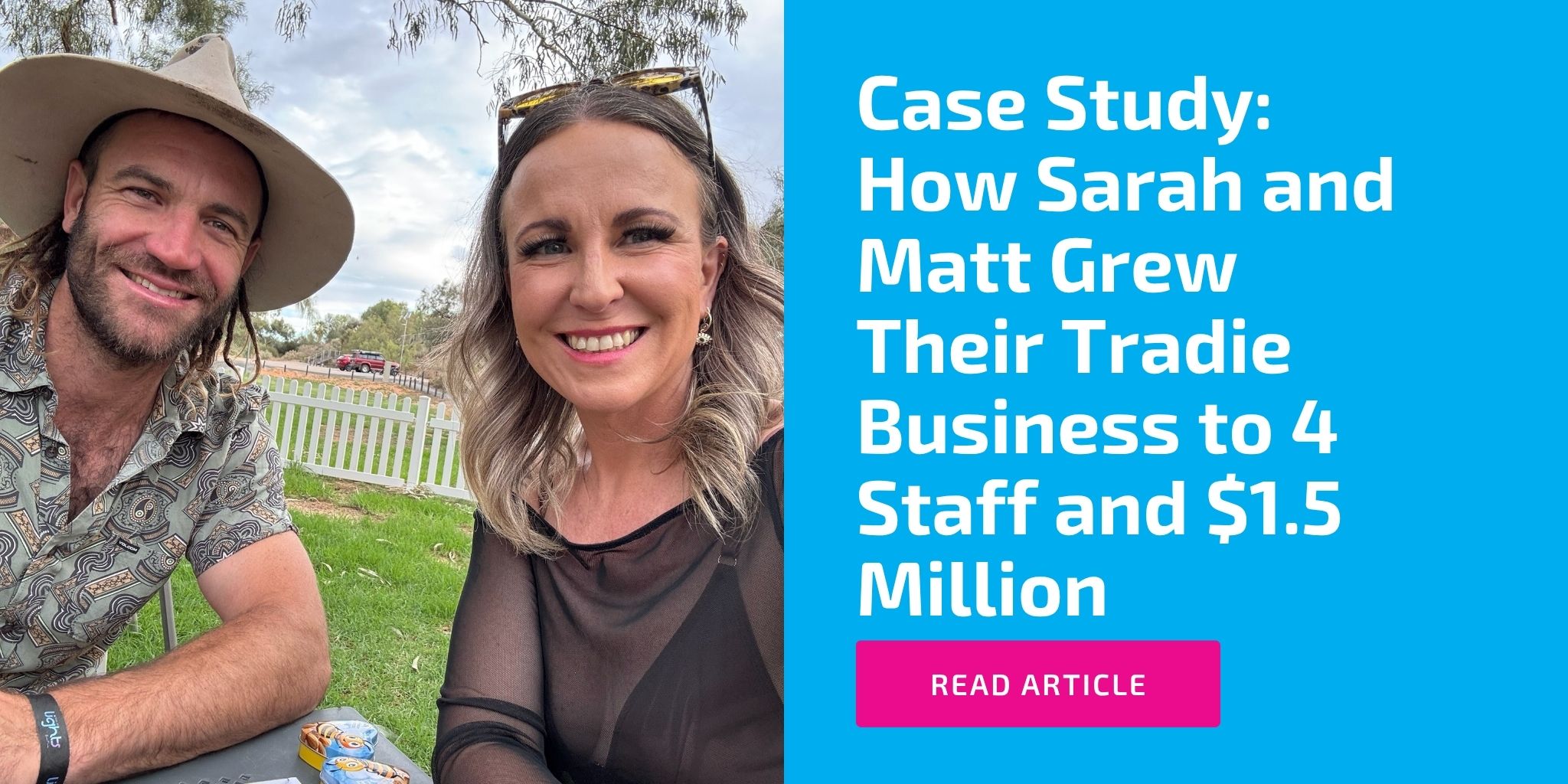
With the modelling done, the plan became clear. Sarah and Matt would grow their team from two staff to four, with a target of reaching $1.5 million in revenue.
What stood out to us wasn't the size of the number. It was the discipline behind it. This wasn't "let's hire and see what happens." Every new hire had a defined role, a documented process to follow, and a clear connection back to the revenue target that justified their wage in the first place.
Sarah's role shifted too. As the team grew, so did the need for her part of the business, admin, scheduling, and the systems that keep four tradies and their jobs running smoothly, to be just as solid as Matt's side of things. Growth wasn't something that happened to Matt's team. It was something Sarah and Matt built together, and it's exactly the kind of trap we unpack in Tradie Business Growth: The One Hiring Mistake Costing You Time and Profits, the mistake of growing the tools side of the business without growing the admin side to match.
The Result: A Bigger Business, a Bigger Pay Rise, and Room to Breathe
Here's the number that tends to surprise people. With the plan in motion, Matt's take-home is projected to increase by roughly $20,000 once they reach four staff and $1.5 million in revenue.
Twenty thousand dollars might not sound dramatic against a $1.5 million figure. But that's exactly the point, and it's a lesson we want every tradie couple to sit with. Growth done properly is often a smaller, steadier win than the headline revenue number suggests. It's not about chasing a bigger number for its own sake. It's about making sure that bigger number actually turns into more security for your family.
For Sarah and Matt, that steadier win was worth far more than a flashy jump in turnover. It meant growth that could actually be sustained, not growth that would need to be walked back six months later once the wage bill caught up with them.

The Relationship Impact: Less Lying Awake, More Certainty
This is the part of the story that doesn't show up in a spreadsheet, and it's the part we care about most.
Before this process, even with a stable business, there was still an undercurrent of uncertainty. Was this the right move? Were they about to overextend themselves? Sarah told us that once the plan was modelled and the numbers made sense, that uncertainty lifted in a way she hadn't expected.
She wasn't lying awake wondering if this month's wages would clear. Matt wasn't carrying the weight of a decision he'd made on gut feel alone. They made this call together, with real numbers in front of them, and that changed the emotional weight of growth completely. Growth stopped being a gamble they were both quietly anxious about, and became a plan they were both genuinely excited by.
That's the difference between growth that strains a relationship and growth that strengthens it. It's not the size of the decision. It's whether both people are standing on solid ground when they make it.
The Business Impact: Growth That Can Actually Hold
A year from now, Sarah and Matt's business won't just be bigger. It will be built properly for the size it's grown into. Four staff, each with a defined role. Systems that were strengthened before the team expanded, not scrambled together afterward. An admin structure that grew in step with the tools side of the business, instead of being left behind.
This is what we mean when we talk about growth being a strategic choice rather than a default response to being busy. Sarah and Matt didn't grow because they were overwhelmed. They grew because the numbers told them it was safe to, and because they'd built a foundation that could actually carry the weight of a bigger team.
What This Case Study Teaches Every Tradie Couple
You don't need to be running a $1.5 million business to take something from Sarah and Matt's story. The principles hold at every size, the same way they did for the couple in From Struggle to Success: How Brenton and Marcus Transformed Their Tradie Businesses and Doubled Their Profit.
- Growth is safest when it's modelled, not guessed. Know what a new hire needs to generate before you bring them on, not after.
- A smaller pay increase with real security beats a bigger number built on shaky ground. Twenty thousand dollars, achieved safely, will always outlast a bigger figure that collapses under its own weight.
- Both people need to be part of the decision. Sarah's certainty mattered just as much as Matt's numbers. Growth that only one partner understands is growth that only one partner carries.
- Systems need to grow before the team does, not after. Sarah and Matt strengthened their admin and processes ahead of hiring, which is exactly why the growth has held.
Practical Takeaways
Questions to ask before you grow like Sarah and Matt did:
- What does a new hire actually need to generate in revenue to be worth their wage?
- Have we modelled a full year of costs for this role, including tools, vehicle, and onboarding time?
- Is there a documented process for this role, or does it only exist in one person's head?
- Are we both part of this decision, or is one of us carrying it alone?
Quick wins to borrow from their story:
- Before advertising a role, write down the revenue target it needs to help you hit
- Sit down together and put real numbers on the next 12 months, not just a feeling that "it'll work out"
- Strengthen your admin and systems side before your team grows, not after
A Note of Hope
If you're sitting where Sarah and Matt were, stable but wondering what's next, take this as permission to slow down enough to model it properly. Growth doesn't have to be a leap of faith. It can be a plan you both understand, built on numbers you both trust.
And if your business isn't at that stable point yet, that's alright too. Every growth story starts with a foundation. Sarah and Matt's just happened to be ready a little earlier than most.
Let's Talk About Your Next Step
If you're wondering whether your business is ready to grow, or what that growth should actually look like for your family, let's have a conversation. Book a Free What To Fix First Call with our coaching team and let's map out what a safe, sustainable next step looks like for you. Not sure where to start? Read what Ladies with Tradies actually does before you book.