

Industry data backs this up: manual admin (scheduling, invoicing, payment chasing, data entry) regularly eats 15 to 20 hours a week for a small trade business, which can add up to over $50,000 a year in wasted labour alone. On top of that, businesses relying on informal, undocumented systems miss a significant share of inbound leads simply because no one owns the process of following them up.
This is one of the most common issues showing up across trade businesses right now, whether it's a plumber, electrician, builder, or landscaper. Tension between staff, tension between business partners, missed invoicing, and overwhelming leads all trace back to the same root cause: processes that are either missing entirely or no longer working for the size the business has grown into.
Below are three real examples from trade businesses currently going through exactly this, the simple fixes that turned reactive chaos into a proactive, profitable system, and what you can do this week to start closing the same gaps.
The Real Problem: It's Not Always a "No Process" Issue
There are two versions of this problem, and it's important to know which one you're dealing with:
- No process exists at all. Tasks get done based on memory, mood, or whoever happens to notice something is overdue.
- A process exists, but it's outdated. It worked when the business was smaller, but it hasn't been rebuilt to match current workload, team size, or complexity.
The fix for both is the same: get specific, and get clear on who owns what.
Real-Life Example #1: The Invoicing Bottleneck
One tradie business owner was consistently falling behind on getting invoices out the door. Not because he didn't care. Invoicing had never been broken down into a clear, shared process. It was sitting entirely on him.
The fix:
- Admin support was brought in to share the load.
- One person became responsible for confirming all materials were logged in and priced correctly.
- Another person became responsible for checking all subcontractor bills tied to that job were accurate.
- The tradie's role was reduced to a final check: tick, flick, done.
Invoicing now moves significantly faster, simply because no single person is trying to hold the entire process in their head.
The takeaway: If invoicing (or any admin task) keeps slipping, the fix usually isn't "try harder." It's splitting the task into clear, owned steps. If you're at the point of wondering whether it's time to bring in extra hands, Can You Afford To Hire Admin Support? Here's How to Know walks through exactly how to work that out.
Real-Life Example #2: Too Many Leads, Not Enough Filtering
Another business was overwhelmed, not because business was bad, but because too much work and too many inquiries were coming in with zero filtering. Every lead was treated the same, whether it was a great fit or a total time-waster.
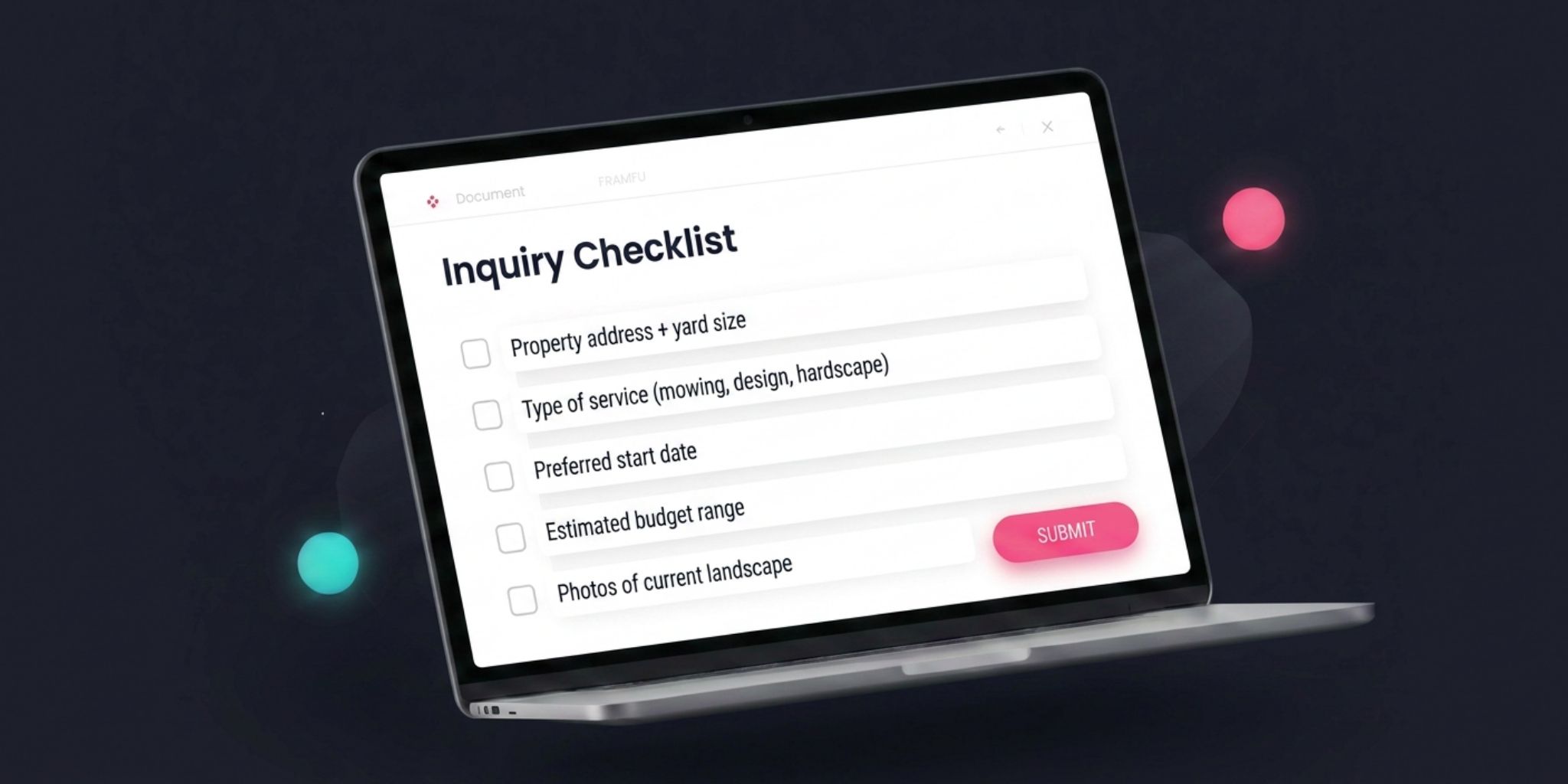
The fix: The team sat down and rebuilt the inquiry process from scratch, starting with one key question:
"What do you actually need to know before you get there?"
From that conversation, they built a new inquiry checklist and intake form designed to:
- Capture the right information upfront
- Rule out poor-fit jobs before a quote is even booked
- Reduce time wasted on tire-kickers
- Let the business focus on inquiries worth chasing
The takeaway: More leads isn't always the goal. A clear intake process protects your time by filtering out the jobs that were never going to be worth taking. If your sales process needs the same kind of overhaul, The Power of a Sales Process for Australian Tradie Business Owners breaks down where to start.
Real-Life Example #3: Ditching the Paper Diary
A third business had been running entirely on paper: diary bookings, handwritten job notes, everything tracked manually by the tradie. It's a familiar (and honestly endearing) way tradies have operated for years. But it doesn't scale.
The fix:
- The business is rolling out ServiceM8 to digitise scheduling and job tracking.
- A family member (the owner's son) is being brought on to help manage the transition.
- Roles are being clearly mapped out: who does what, and how each part of the job flows from booking to completion.
The takeaway: Manual systems aren't a character flaw, they're just a growth ceiling. At a certain size, "in my head" or "in my diary" stops being sustainable, and moving to a system like ServiceM8, Tradify, or Jobber isn't about losing the tradie way of doing things. It's about protecting your time enough to keep growing.
What Unclear Processes Are Actually Costing You
It's easy to write this off as "just how it is" when you're busy. But broken down, the cost is real:
- Lost admin hours: A small trade business can lose 15 to 20 hours a week to manual scheduling, invoicing, and chasing payments. That's the equivalent of half a full-time wage spent on tasks a clear process or simple software could handle in minutes.
- Missed or delayed invoicing: Every week an invoice sits unsent is a week of cash flow you don't have.
- Wasted quoting time: Without a filtering process, you're spending hours quoting jobs that were never going to convert.
- Team friction: When responsibility isn't clearly assigned, tasks get dropped, and staff (or business partners) start blaming each other instead of fixing the system.
None of this shows up as a clean line item on your profit and loss. But it's coming out of your bottom line every single week.
The Questions Every Tradie Business Owner Should Be Asking
Before you can fix a broken process, you need to know it's actually broken. Ask yourself:
- Are our processes clear enough that someone else could follow them without asking me?
- Do they need to be broken down into smaller, owned steps?
- Have I actually asked my team where they get stuck or confused?
- Is this process still built for the size we are now, or the size we were two years ago?
- If I disappeared for a week, would invoicing, follow-ups, and scheduling still happen?
Why "Waiting to Feel Like It" Is Costing You
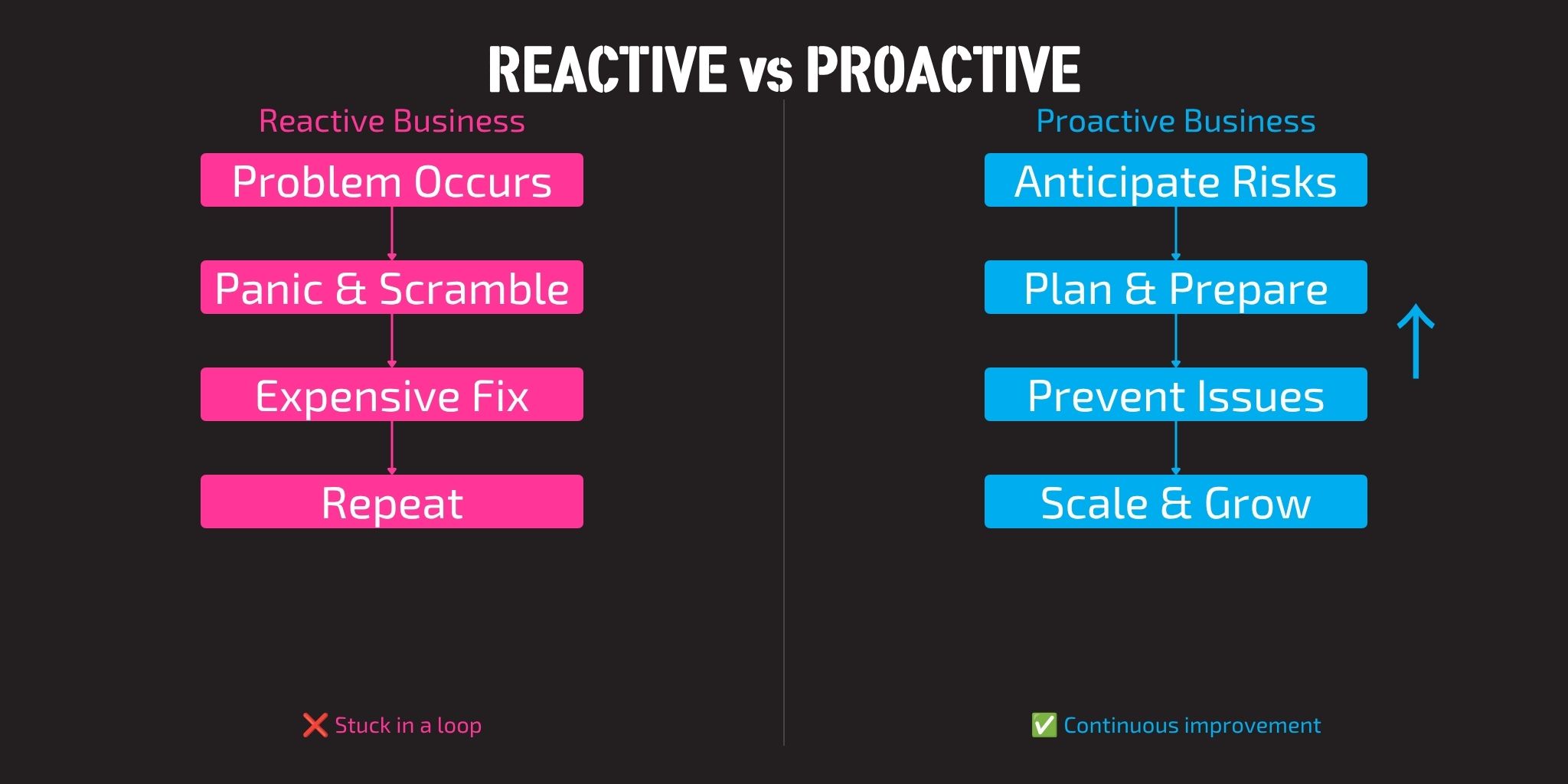
Here's the uncomfortable truth: most tradies don't chase invoices, follow up on debt, or call clients back because they feel like doing it. They do it when something forces their hand , no money in the account, a client growling, an empty pipeline.
That's a reactive business.
A proactive, profitable business looks different:
- Clear processes exist for the tasks that matter most.
- Everyone knows exactly whose job it is.
- Time is carved out for the task before it becomes urgent.
When the process is clear and the responsibility is clear, the task gets done, not because someone felt motivated, but because the system made it easy to just do it.
Key Takeaways
- Tension in your team or business is often a symptom of unclear processes, not a people problem.
- Manual admin can quietly cost a small trade business tens of thousands of dollars a year in lost hours.
- Break tasks like invoicing into shared, owned steps rather than one person carrying it all.
- A strong inquiry process filters out bad-fit leads before they waste your time.
- Moving off paper-based systems (like into ServiceM8, Tradify, or similar tools) isn't about ditching the "tradie way." It's about scaling it.
- Reactive businesses fix things when it hurts. Proactive businesses fix things before it does.
Frequently Asked Questions
How do I know if my trade business needs better processes? If tasks like invoicing, follow-ups, or scheduling only get done when something forces the issue (an angry client, an empty bank account), your business is running reactively rather than on a clear process.
Do I need software to fix my processes, or can I do it manually first? Start with clarity, not software. Map out who is responsible for each step first. The tool comes second. Many businesses fix 80% of the problem simply by assigning clear ownership before ever touching a platform like ServiceM8 or Tradify.
How much does poor admin actually cost a trade business? Depending on team size, manual admin can cost a small trade business upwards of $50,000 a year in lost labour hours, on top of the cash flow impact of delayed invoicing and missed follow-ups.
Ready to Get Your Processes Working For You, Not Against You?
If any of this sounds familiar (invoicing that never quite gets done, inquiries that feel overwhelming, or a business still running on paper and memory), it's worth getting a second set of eyes on it.Book a free call with our team and we'll help you pinpoint exactly where your processes are breaking down and what to fix first.