

If your bank account feels like a rollercoaster, flush one month and empty the next, it’s tempting to assume the business just isn’t making enough money. But in a lot of trade businesses, that’s not actually what’s going on. The real issue is often sitting in the schedule, not the sales figures.
This is one of the most common patterns we see across the trades industry. The business is busy, the work is coming in, and yet cashflow is still a source of constant stress. Once we dig into it, the problem usually isn’t a lack of income. It’s how that income is being spread across the month, and that comes down to what type of work is being booked, when payment actually lands, and how the deposit and staging structure is set up.
Below are three practical scheduling fixes that consistently make the biggest difference along with real examples of what happens when they’re ignored, and what changes when they’re not.
Why Cashflow Stress Is Often a Scheduling Problem, Not a Money Problem
It’s easy to assume that more work automatically means more cash in the bank. In reality, a business can be flat out and still be cash poor, simply because of how that work is timed and paid for.
Picture a business that’s mostly running long project work, jobs that take a month or two to complete. Materials need to be paid for upfront to get started, but the final payment doesn’t land until the job wraps up weeks later. That creates a cash gap, a stretch of time where money is going out steadily but not coming back in. If most of the business’s work follows this pattern, that gap becomes the business’s default state.
This is exactly the pattern we see hit builders, project-based sparkies, plumbers, and concreters the hardest, essentially any trade where work happens in stages rather than being completed and paid for in a single visit.
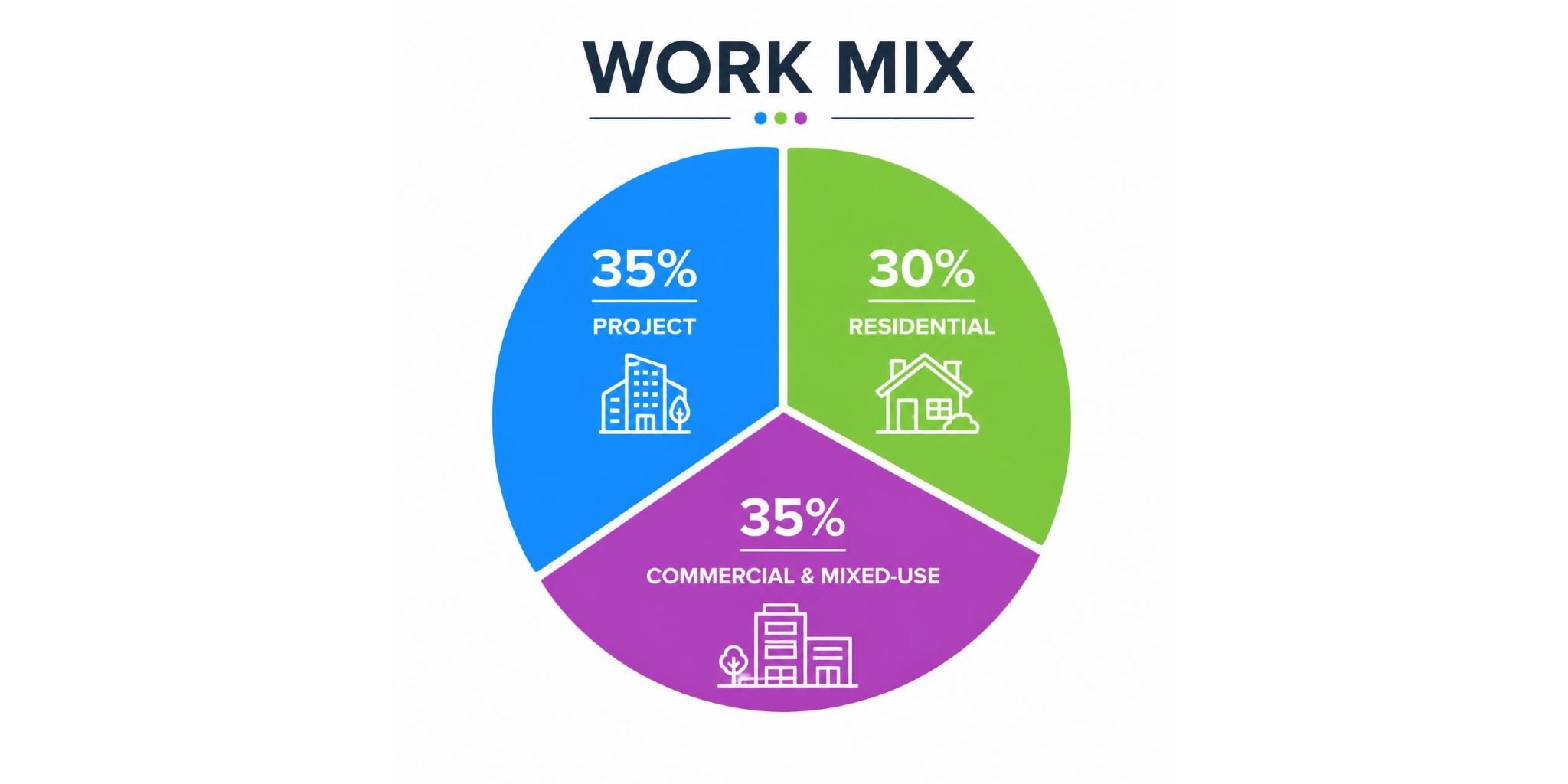
Fix #1: Don’t Put All Your Eggs In One Basket (Work Mix)
Every trade business should realistically be running a minimum of two, ideally three, different segments of work. Not three different trades, three different types of work within the same trade.
That might look like:
- Project work - jobs that take a month or two to complete
- Private residential work - smaller, faster jobs for everyday homeowners
- A third segment - insurance work, NDIS work, government contracts, or larger commercial clients, depending on the industry.
If more than about 70% of the business’s work sits in the project basket, cashflow issues are almost guaranteed. Project work should be topping up the business, not carrying it entirely.
There’s a flip side too. Businesses that only do small, high-frequency jobs, say an average job value of $300 to $400, get steady cash but hit a ceiling quickly. To grow, they need serious volume, because there’s only so much low-dollar work one team can physically get through in a week.
The exception: businesses running eight to ten staff or more, doing high volume, high frequency work as their core, can often carry more project work comfortably. At that scale, the frequent smaller jobs cover the break-even point on their own, and the project work becomes the cream on top rather than the thing propping up the whole business.
The takeaway: know what percentage of work sits in each basket. If one basket is holding more than 70% of your eggs, it’s time to diversify.
Fix #2: Match Your Payment Terms to the Type of Work
This is one of the simplest fixes available, and one of the most commonly missed. Payment terms shouldn’t be a default setting. They should match the type of work being done.
For private residential work, the rule is straightforward: payment is due the day the job is finished, cash on delivery. There’s no good reason to offer 7-day or 14-day terms on a job for a homeowner. Some commercial clients may still expect extended terms, but for business to customer work, payment on completion should be the standard.
When a business runs too much work on 14, 30, or 60 day terms without accounting for it in scheduling, the cash gap widens. Materials get paid for upfront, but the income to cover them doesn’t land for weeks. That’s when a business ends up looking like a leaky tap, a big spike in materials spending one month, followed by a quiet month where the invoices finally catch up.
The takeaway: shorten the cash gap wherever possible. Private residential work is the easiest place to do this. If you’re currently offering the extended terms out of habit rather than necessity, this is worth revisiting immediately.
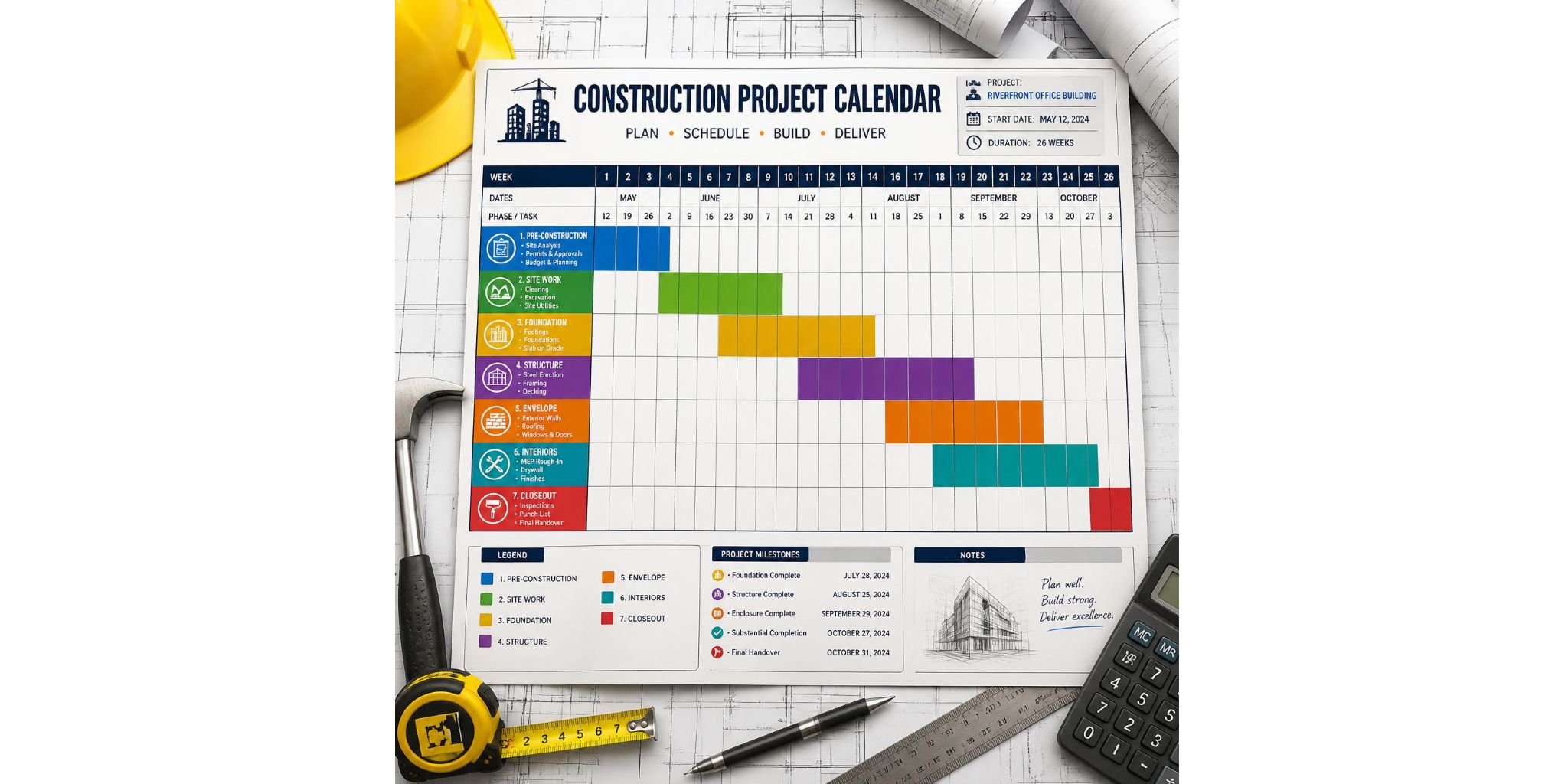
Fix #3: Use Deposits and Payment Stages Properly
Deposits and staged payments exist for a reason, and skipping them is one of the fastest ways to create avoidable cashflow stress.
A simple rule of thumb: if a job is worth $5,000 or more, a deposit should be standard practice. It’s not about distrust, it’s about protecting the business’s ability to fund materials and labour before the job even starts.
For larger project work, staging matters just as much as the deposit itself. We’ve worked with building clients who restructured their contract terms to include up to 12 separate payment stages instead of just a handful. That means money is coming in more often throughout the job, rather than being backloaded to the very end.
The takeaway: the bigger or longer the job, the more stages it should have. More frequent payment points mean the business isn’t carrying the full financial weight of a job for weeks or months at a time.
What This Actually Looks Like Once You Know Your Break-Even
Once a business knows its break-even point, all of this becomes much easier to plan around. Instead of guessing how much project work is “too much,” the business can work out exactly how much steady, frequent work it needs to cover its costs, and treat anything on top of that, including project work, as genuine profit rather than a cashflow risk.
That might mean deliberately limiting project work to one week a month, or two days a week, depending on what the numbers say the business can safely absorb. It’s not about avoiding bigger jobs altogether. It’s about making sure they’re supported by enough steady, faster-paying work underneath them.
If you don’t currently know your break-even by job type, that’s the natural next step before trying to fine-tune your schedule. 4 Reasons You Need to Know Your Job Profitability is a good place to start.
A Real Example: The Builder Who Fixed the Leaky Tap
This pattern shows up constantly with builders in particular. A business running mostly project work, minimal deposits, and standard 30-day terms will often describe their cashflow as unpredictable, even when the work itself is going well.
The fix isn’t more sales. It’s restructuring how that same amount of work is scheduled and paid for. Splitting project work down into smaller payment stages, adding a genuine deposit before materials are ordered, and blending in some faster-paying residential work alongside the bigger jobs is often enough to turn a business from feeling like it’s constantly playing catch-up to having a predictable, steady cash position. We’ve seen this exact shift play out with clients like Brenton and Marcus, whose full story of fixing pricing and cashflow control is worth a read in From Struggle to Success: How Brenton and Marcus Transformed Their Tradie Businesses and Doubled Their Profit.
Key Takeaways
- Cashflow stress is often a scheduling problem before it’s a money problem.
- Run at least two to three segments of work, and keep no more than about 70% of your work in the project basket unless you have serious scale.
- Match payment terms to the job type. Private residential should be paid on the day the job is finished.
- Use deposits on jobs worth $5,000 or more, and break bigger project work into multiple payment stages.
- Know your break-even point so you can work out exactly how much project work your business can safely carry.
Frequently Asked Questions
Why does my tradie business feel busy but still have cashflow problems? This usually comes down to timing, not income. If most of your work is long project jobs with materials paid upfront and payment only landing at the end, you’ll experience a cash gap even during a genuinely busy period.
How much deposit should I be taking on a job? As a general rule, jobs worth $5,000 or more should include a deposit to cover upfront material and labour costs. The exact percentage should reflect your real upfront costs for that job.
What payment terms should I use for private residential work? Payment on the day the job is completed. Extended terms of 14, 30, or 60 days are best reserved for select commercial clients, not standard homeowner work.
Ready to Get Your Cashflow Working For You?
If your business feels busy but your bank account doesn’t reflect it, it’s worth taking a proper look at how your work is scheduled and how your payment terms are structured. Small changes here can make a bigger difference than chasing more sales ever will.
Book a free call with our team and we’ll help you map out your work mix, payment terms, and staging so cashflow stops being something you have to cross your fingers about. You can also dig further into your numbers with Review Your Finances The Tradie Way while you wait for your call.